
2026-08-19 · Luis Domingo
Checking Your Attic For Water Intrusion After Heavy Rain
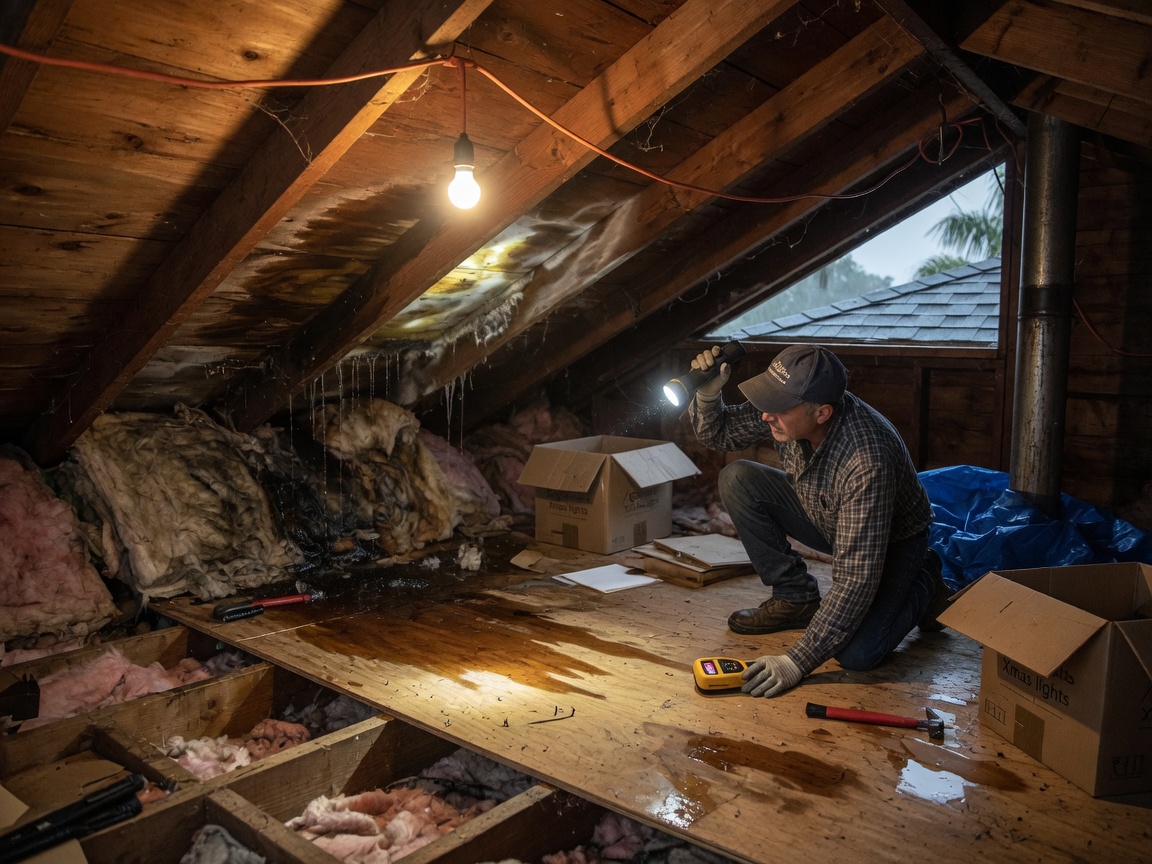
After heavy rain in Del Valle, inspect your attic within 24 to 48 hours to spot water intrusion before it spreads to ceilings or insulation. The humid subtropical climate brings intense downpours that test roofs on older homes near the Colorado River and around Austin-Bergstrom International Airport. Start at the peak and work downward, looking for active drips or damp spots that indicate shingle failure or flashing gaps common in Travis County properties.
Preparing for Your Attic Inspection
Wear a headlamp, dust mask, and gloves before climbing into the attic space. Bring a flashlight, notepad, and moisture meter to record exact locations of any damp areas. In Del Valle homes built near McKinney Falls State Park or Circuit of the Americas, attics often hold blown-in insulation that hides small leaks until they grow. Check the weather forecast first—mild winters here mean storms can arrive year-round, so schedule inspections after any rainfall exceeding one inch. Clear a safe path through stored items and avoid stepping on ceiling joists to prevent damage. This preparation takes 15 to 20 minutes and helps you complete a thorough check without missing hidden moisture near the Colorado River floodplain.
Identifying Water Stains and Damage
Look for dark rings or streaks on rafters and sheathing that signal repeated water entry. In humid subtropical conditions, these stains often appear brownish and feel soft when probed. Measure any wet insulation patches larger than six inches across, as they reduce R-value and promote mold growth common in Pflugerville and Buda homes. Note if plywood shows delamination or dark mold lines along seams. Pay special attention to areas above bathrooms and kitchens where pipes meet the roof deck. Document each spot with photos and dates so you can track whether the issue worsens after the next storm. Early detection prevents ceiling drywall repairs that frequently follow undetected leaks in older Travis County housing stock.
Checking Insulation and Ventilation
Pull back insulation carefully to inspect the roof deck for dark water lines or active drips. Compressed or soggy cellulose near eaves often points to poor ventilation that traps moisture after heavy rains. In Del Valle, where summers stay hot and humid, blocked soffit vents near the Colorado River area can turn minor roof leaks into widespread attic damage. Check that ridge vents remain clear of debris and that baffles keep airflow moving above the insulation. If you find damp fiberglass batts, replace them promptly to avoid structural rot on rafters. This step reveals whether your roof needs better airflow or immediate leak repairs before the next seasonal storm.
Common Issues in Travis County Homes
Many Del Valle roofs experience leaks at valleys and penetrations where flashing meets the deck. Tree overhang from nearby parks drops leaves that clog gutters and force water under shingles during downpours. Homes near Austin-Bergstrom International Airport often face wind-driven rain that pushes moisture past aging seals. Soil movement in the Colorado River area can shift foundations slightly, stressing roof planes and creating new entry points. These local factors make regular post-storm checks essential rather than optional for homeowners in Buda or Pflugerville.
Next Steps After Detection
If you locate active moisture, contact a roofer immediately for targeted assessment. Roof leak repair addresses the source before interior damage spreads. Consider scheduling a full roof inspection to evaluate whether storm damage roof repair is needed. Review related guidance on recognizing wind damage to flashing and shingles and how to spot hail damage on asphalt shingles after a storm for additional context. Domingo Brothers Roofing Construction operates from 12800 Pearce Ln, Del Valle, TX 78617 with hours Monday through Friday 8am to 6pm and Saturday 9am to 2pm.