
2026-08-19 · Luis Domingo
How To Spot Hail Damage On Asphalt Shingles After A Storm
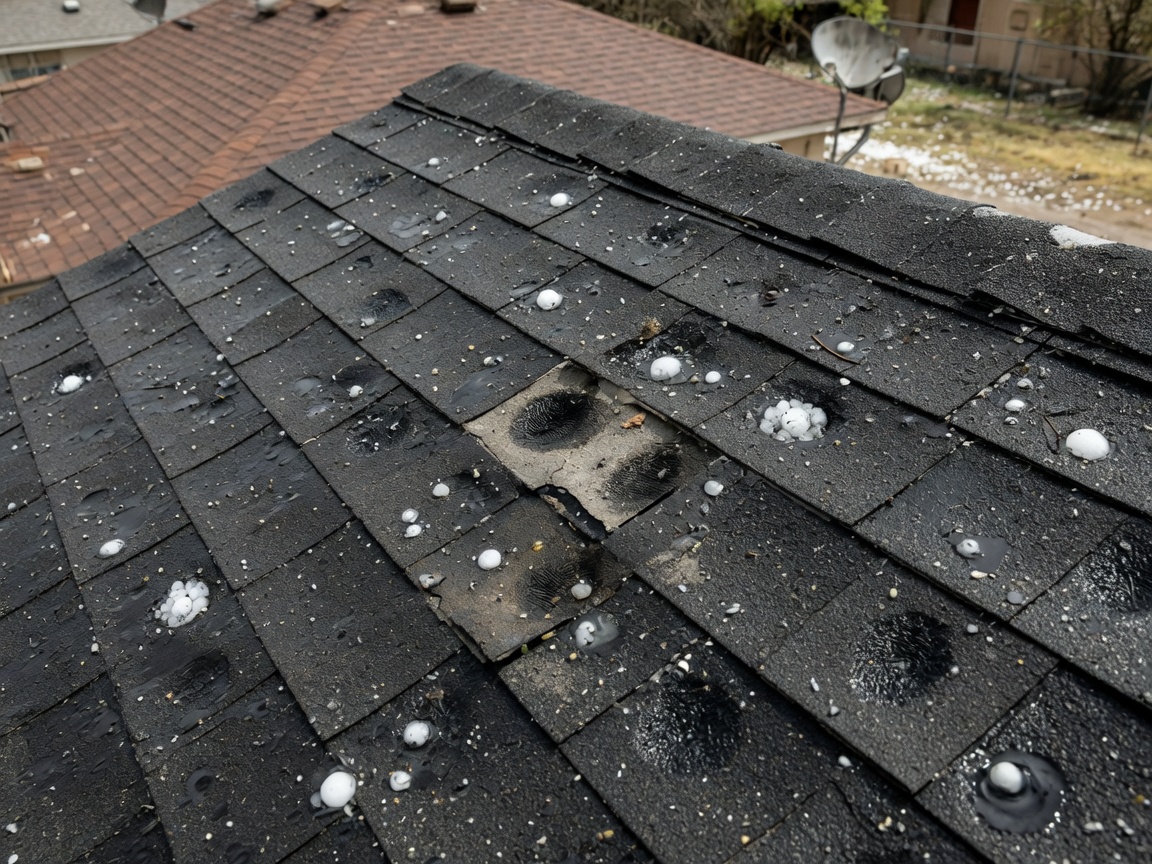
Hail damage on asphalt shingles shows up as scattered circular dents roughly 1/4 to 1 inch wide with missing granules, often appearing within a few days after a storm crosses the Colorado River area in Travis County. These marks differ from uniform aging because hail strikes create concentrated impact zones rather than gradual fading across the entire surface. In Del Valle neighborhoods close to Austin-Bergstrom International Airport and Circuit of the Americas, sudden hail events during humid subtropical summers can leave roofs with soft spots that leak once water sits in the exposed felt.
Spotting Granule Loss Patterns
Walk the roof on a dry day and look for patches where the protective granules have been knocked away in round clusters rather than straight lines from foot traffic. Hold a bright flashlight at an angle across the shingles to reveal the exposed black mat underneath, which accelerates UV breakdown in the hot summers common to Del Valle. Homes built near McKinney Falls State Park often have 15- to 20-year-old asphalt shingles that already carry some wear, making fresh hail marks stand out as darker circles against the lighter surrounding granules. Compare the roof slope facing prevailing storm winds first, since that side takes the brunt of hail driven across the flat terrain east of Austin. If granule loss appears only on one elevation and matches the size of pea to marble hail reported in local weather alerts, the pattern points to impact rather than normal shedding.
Testing for Hidden Soft Spots
Press gently with a gloved hand on suspected dents to feel whether the shingle mat has cracked through to the underlayment, a sign that water will reach the deck during the next rainfall. In the mild winters of Travis County, these cracks may not expand immediately, yet they allow moisture to collect under the shingles when humidity rises again in spring. Check along the Colorado River corridor where wind-driven hail can hit at steeper angles, creating elongated dents on the lower courses that standard walking inspections miss. Use binoculars from the ground to scan for missing tabs or raised edges that indicate the shingle has lost its seal after impact. Document each location with photos that include a ruler for scale before any rain arrives, because once water enters the damaged areas the evidence becomes harder to isolate from ordinary leaks.
Timing Inspections After Local Storms
Schedule a close look within one week of a reported hail event, because the combination of hot afternoons and evening thunderstorms in Del Valle can mask early damage under new leaf debris or dirt. Properties near Pflugerville and Buda share the same storm tracks, so patterns seen on one roof often repeat on others built in the same decade. Roof Inspection helps confirm whether the dents penetrate far enough to require targeted fixes or signal broader issues that call for Hail Damage Roof Repair. Compare findings against the article on Roofing Material Choices Suited To Central Texas Weather to understand how granule weight and mat thickness affect hail resistance in this climate. Avoid waiting until the next heavy rain, since water that reaches the deck through cracked shingles can travel laterally under the felt before any interior signs appear.
Deciding Between Repair and Replacement
Count the number of damaged shingles per square; when the count exceeds 20-25 percent across multiple slopes, full replacement usually proves more reliable than repeated spot fixes in the humid conditions around the Colorado River. Older homes in Del Valle with three-tab shingles from the 1990s show faster granule loss after hail because the thinner mats lack the reinforcement found in modern architectural products. Review the guidance in When Minor Repairs Make Sense Versus Full Replacement to weigh the cost of repeated shingle swaps against the labor required to match aged material. Track any new leaks during the first mild winter rains, as these confirm that impact damage has progressed beyond surface granule loss. Homeowners who note damage early can often limit work to the affected elevations rather than the entire roof surface.